When people hear "rubber casters," they might think of them as minor components not worth a detailed explanation. However, these wheels are common on many material-handling carts and light-duty equipment. Rubber offers excellent noise reduction and shock absorption, making it ideal for indoor use or smooth floor surfaces.
The core value of these casters lies in balancing load capacity with maneuverability. The typical load limit per wheel ranges from 50 to 100 kg, depending on the wheel structure and bearing type. A crucial rule of thumb: if your equipment uses four wheels, calculate the total safe working load based on only three wheels to maintain a safety margin. For example, for equipment weighing 200 kg, you need wheels with at least a 70 kg single-wheel capacity—a medium-heavy-duty rubber caster would be suitable.
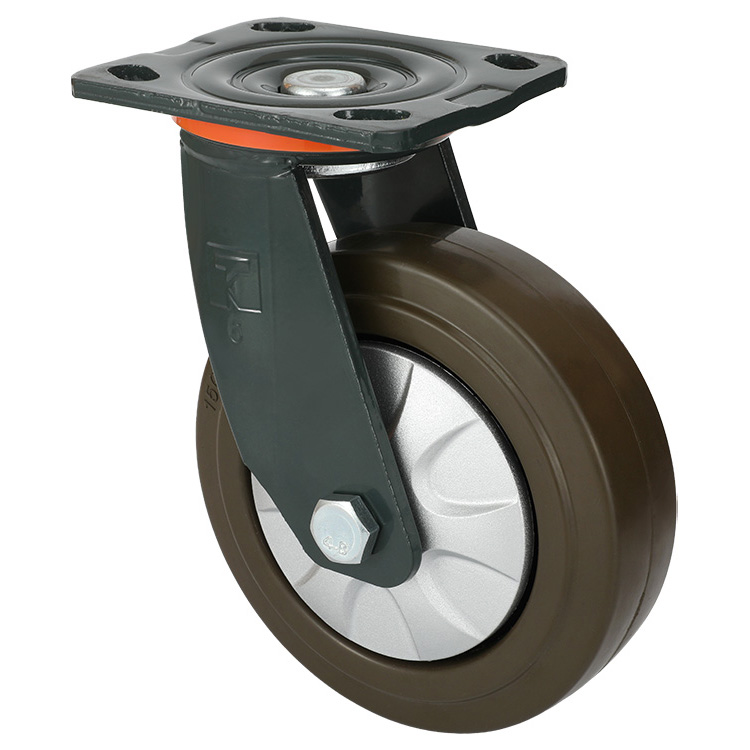
Ensure Mounting Surface Rigidity
Casters attach via top plates or threaded stems, but if the mounting surface is too thin or uneven, it can deform under weight, causing uneven load distribution. We recommend using a steel mounting plate at least 3 mm thick and securing bolts with lock washers. For frequently moved equipment, adding gussets (reinforcing ribs) around the mounting points helps prevent bolt loosening caused by prolonged vibration.
Optimize Steering and Pushing
While most rubber casters feature a swivel design, note that swivel casters have higher rolling resistance than rigid (fixed) casters. For optimal control, we suggest installing two swivel casters at the front and two rigid casters at the rear. This configuration makes pushing easier and turning more agile. Using four swivel casters often leads to instability and difficulty tracking straight. Always apply force near the equipment’s center of gravity; avoid dragging from one side, which can cause caster misalignment or lockup.
Understand Wear and Lifespan
Rubber treads are vulnerable to rough concrete floors or long-distance towing, as abrasive surfaces act like sandpaper. Inspection frequency should match usage intensity: check monthly for daily use, or quarterly for occasional use. Replace casters when the rubber tread wears down by one-third of its original thickness or shows signs of cracking (crazing). Dust ingress into bearings accelerates wear—regularly blow out debris from bearing cavities with compressed air to significantly extend service life.
Respect Temperature and Environmental Limits
Standard rubber casters typically operate within a temperature range of -20°C to +60°C. Outside this range, rubber hardens, becomes brittle, or may even melt. Never use them near high-temperature ovens, in freezing cold storage, or in areas with excessive oil. If operation in oily environments is unavoidable, opt for polyurethane (PU) or nylon casters instead—rubber wheels perform poorly here, much like tires on an icy surface.
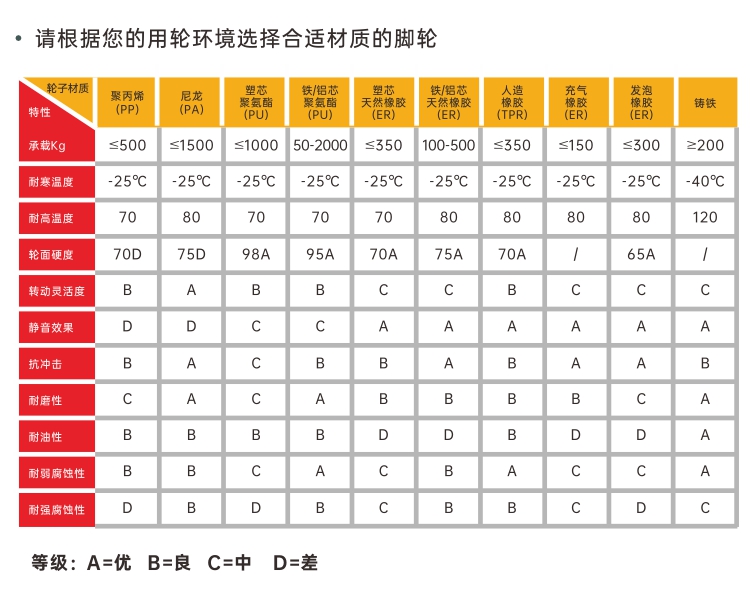
In summary, while casters may seem small, they directly impact the safety and efficiency of material handling. From proper selection and installation to daily operation and routine maintenance, attention to these details saves unnecessary trouble down the road.